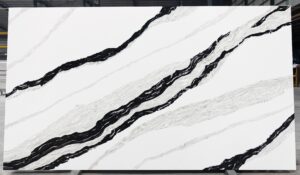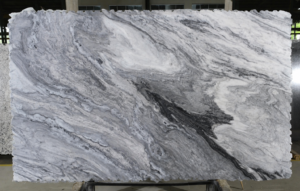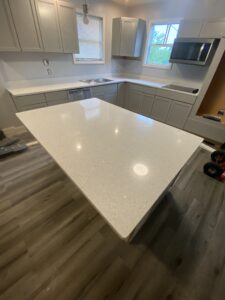
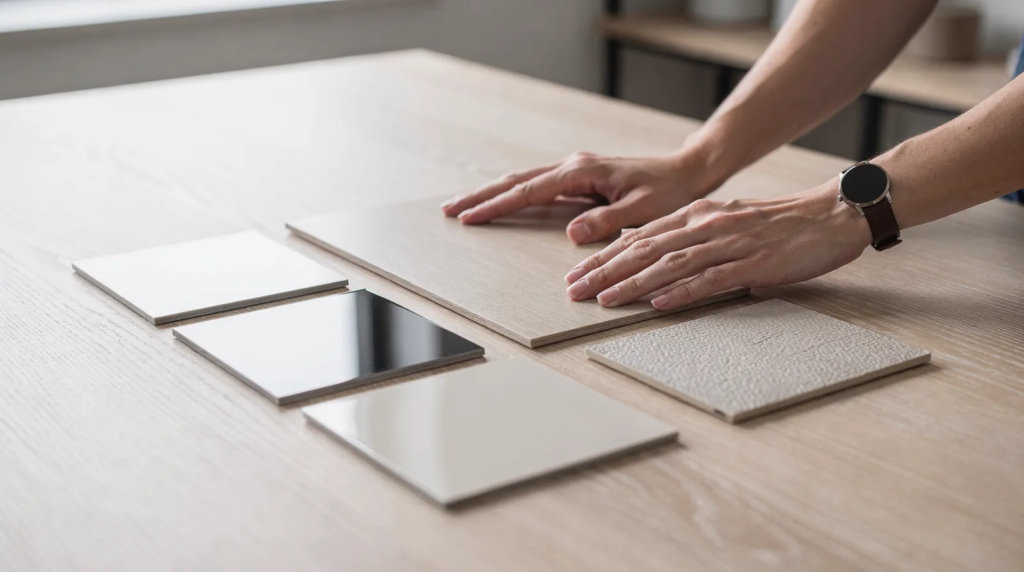
Choosing between leathered vs. polished granite comes down to more than appearance. Polished granite offers a glossy, reflective surface that enhances color, veining, and natural depth, while leathered granite provides a low-sheen, textured finish that can better disguise fingerprints, water spots, and minor surface wear.
Neither finish makes the granite fundamentally stronger or weaker. The better choice depends on how you use your kitchen, how much maintenance you want to perform, and the visual character you want to create.
What Makes Leathered and Polished Granite Different?
The biggest difference is the treatment applied to the surface after the granite slab is cut and prepared.
Polished granite has a smooth, highly reflective surface. Its shine emphasizes the stone’s natural colors and veining, making the countertop look brighter and more formal.
Leathered granite has a textured, matte-to-low-sheen surface. Instead of reflecting light evenly, the texture creates subtle variations across the slab, giving the stone a more natural and tactile appearance.
For homeowners comparing the two finishes, the main differences are:
- Appearance: Polished is glossy; leathered is matte and textured.
- Feel: Polished feels smooth; leathered has a subtle tactile texture.
- Light: Polished reflects more light; leathered diffuses it.
- Visible marks: Polished surfaces can make fingerprints and minor scratches more noticeable; leathered surfaces tend to camouflage them better.
- Style: Polished often suits formal, contemporary, and traditional kitchens; leathered works particularly well with rustic, farmhouse, industrial, and organic designs.
Which granite finish is more popular?
Polished granite remains the more familiar and widely used countertop finish. Its glossy appearance has become a classic choice for kitchens and bathroom surfaces.
Leathered granite has become increasingly popular among homeowners and designers looking for more texture and a less formal appearance.
Popularity, however, should not determine the choice by itself. The way the countertop will be used matters more.
How Does Each Finish Look and Feel?
The difference becomes especially obvious when light hits the surface.
A polished granite countertop reflects surrounding light and emphasizes the depth of the stone. Colors tend to appear richer, while natural veins and patterns become more visually prominent.
A leathered granite countertop produces much less reflection. Its textured surface creates a softer appearance and allows the natural character of the stone to remain visible without the mirror-like shine.
What does leathered granite feel like?
Leathered granite has a slightly textured feel beneath the hand. The surface isn’t rough like unfinished stone, but it has subtle variations that you can feel when running your fingers across it.
That tactile quality is one of the primary reasons homeowners choose leathered granite.
Which finish works better in a rustic kitchen?
Leathered granite generally complements rustic, farmhouse, industrial, and natural-looking interiors particularly well. Its subdued texture works naturally with wood cabinetry, earthy colors, and other organic materials.
Polished granite tends to complement spaces where the countertop is intended to make a stronger visual statement.
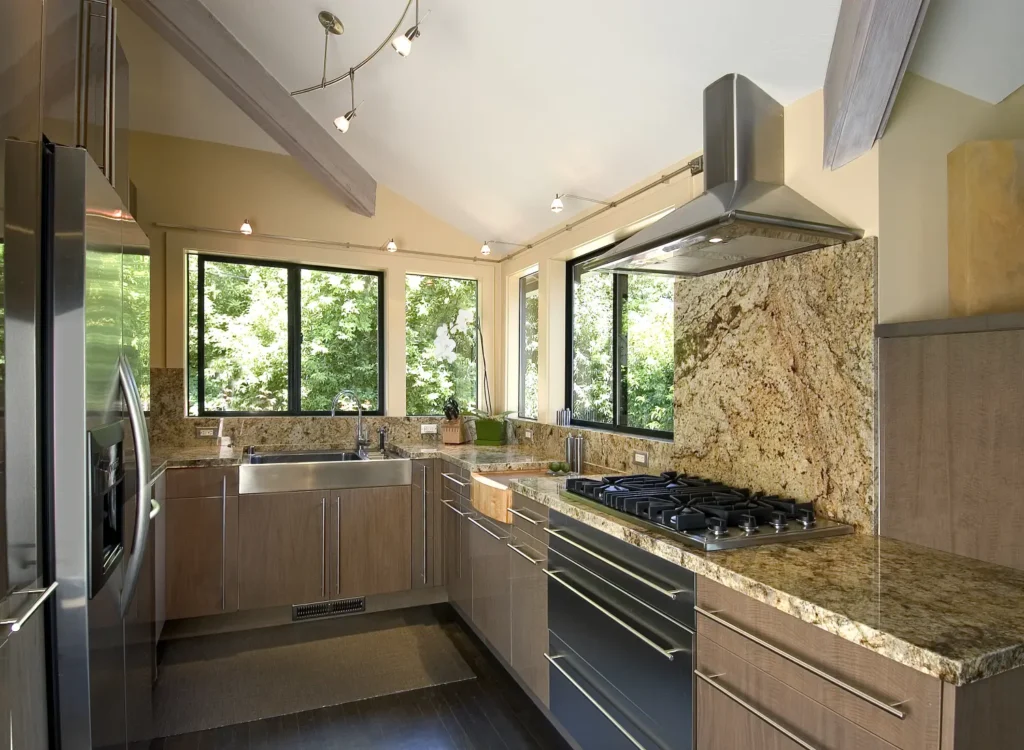
Which Finish Hides Stains and Scratches Better?
One of the strongest practical arguments for leathered granite is its ability to visually camouflage minor everyday marks.
Because the surface is textured and less reflective, fingerprints, small scratches, and water spots are generally less obvious than they would be on a highly glossy surface.
Polished granite can make these marks easier to see because reflected light highlights imperfections.
This does not mean leathered granite cannot stain or scratch. The finish simply makes some types of everyday wear less visually noticeable.
Is leathered granite easier to maintain?
Maintenance requirements depend on the specific stone and finish, but leathered granite can have a practical advantage in busy kitchens because minor marks are less conspicuous.
However, textured surfaces can sometimes require more attention when cleaning because residue may collect in the subtle surface variations.
Homeowners should therefore consider both sides:
Polished granite
- Smooth and easy to wipe
- Reflective and visually striking
- Fingerprints and water spots can be more noticeable
- Minor scratches may stand out more
Leathered granite
- Textured and low-glare
- Better at disguising minor surface wear
- Creates a more casual, natural appearance
- Texture can require more attention during cleaning
Does Finish Choice Affect Granite Durability?
For the granite slab itself, finish choice does not fundamentally change the underlying strength of the stone.
Both polished and leathered countertops are made from the same natural granite material. The finishing process changes the surface appearance and texture rather than transforming the structural characteristics of the stone.
That means homeowners shouldn’t choose between the finishes based primarily on which one they expect to last longer.
Instead, consider how each surface will look and perform during everyday use.
Is leathered granite less durable than polished granite?
Not necessarily. Both finishes can provide the durability associated with granite when properly fabricated, installed, and maintained.
The more meaningful difference is how each finish shows wear.
Polished granite may reveal fingerprints, scratches, and surface marks more readily because of its reflective finish. Leathered granite tends to blend minor imperfections into its existing texture.
Does leathered granite scratch?
Leathered granite can still scratch. Granite is durable, but no countertop surface is completely immune to damage.
The textured finish simply makes some minor marks harder to notice.
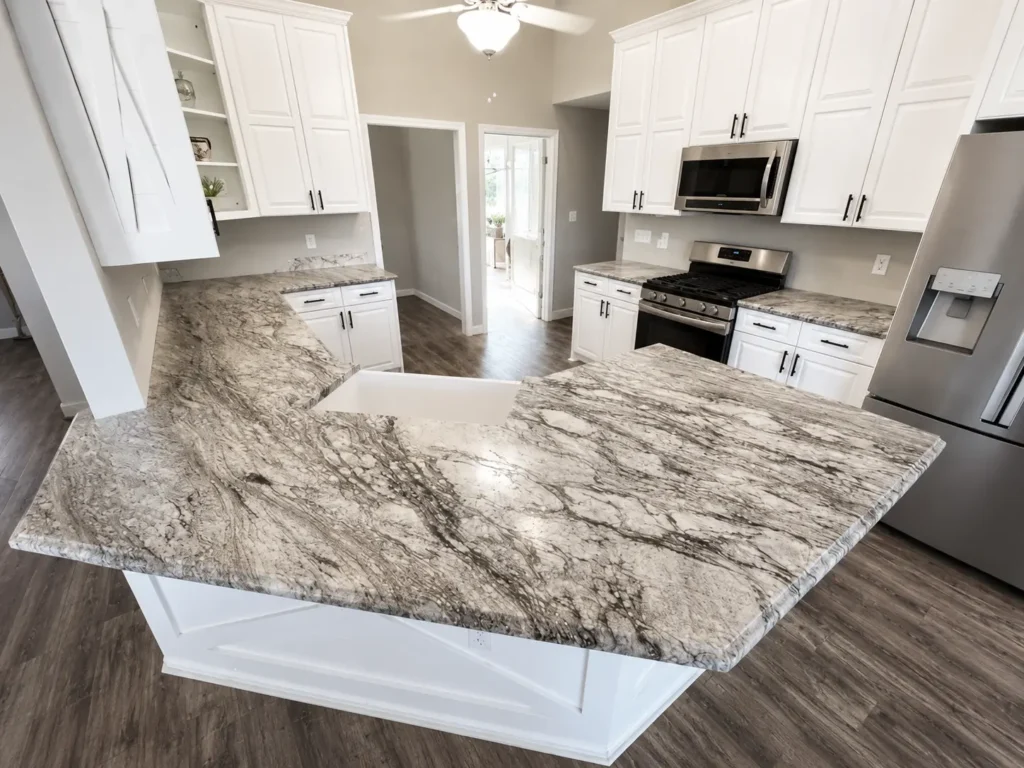
Leathered vs. Polished Granite: Side-by-Side Comparison
| Feature | Polished Granite | Leathered Granite |
|---|---|---|
| Surface | Smooth and glossy | Textured and matte/low-sheen |
| Light reflection | High | Low |
| Color appearance | Rich and enhanced | Softer and more natural |
| Feel | Smooth | Tactile/textured |
| Fingerprints | More visible | Less noticeable |
| Minor scratches | More visible | Better concealed |
| Water spots | More noticeable | Generally less noticeable |
| Cleaning | Smooth surface is easy to wipe | Texture may require more attention |
| Best design fit | Modern, formal, traditional | Rustic, farmhouse, industrial, organic |
| Familiarity | Very high | Growing in popularity |
Which Finish Is Better for a Busy Kitchen?
For a kitchen that sees heavy daily use, leathered granite can offer a practical visual advantage because it tends to disguise fingerprints, small scratches, and water spots.
That makes it particularly attractive for households with children, frequent cooking, or high-traffic kitchen islands.
Polished granite may be preferable when ease of wiping and a bright, reflective appearance are higher priorities.
There isn’t a universal winner. The decision depends on which trade-offs matter most to the household.
Which Granite Finish Best Fits Your Kitchen Style?
The finish can significantly change the personality of the same granite slab.
A dramatic stone with bold veining can look luxurious and sophisticated when polished. The same slab can take on a more understated, organic character when leathered.
Is polished granite better for modern kitchens?
Polished granite works particularly well with modern and formal interiors where clean surfaces, strong reflections, and dramatic stone patterns are desirable.
It also remains a natural fit for traditional kitchens, especially when paired with classic cabinetry and other polished surfaces.
Is leathered granite better for farmhouse kitchens?
Leathered granite is often a strong choice for farmhouse, rustic, and industrial kitchens because its texture works well with natural materials such as wood, brick, metal, and stone.
Its lower sheen also creates a softer appearance than polished granite.
Can either finish work in a transitional kitchen?
Yes. Transitional kitchens can accommodate either finish.
The choice should depend on the other materials in the room. For example, a kitchen featuring highly reflective fixtures and sleek cabinetry may benefit from polished granite, while one combining natural wood, matte hardware, and textured finishes may work better with leathered granite.
How Should You Choose Between Leathered and Polished Granite?
Before selecting a finish, consider how the countertop will actually be used.
Ask yourself:
- Do I want a glossy or matte appearance?
- How important is hiding fingerprints and minor scratches?
- Do I prefer a smooth or textured surface?
- How much cleaning and maintenance am I comfortable with?
- Which finish complements my cabinets, flooring, backsplash, and hardware?
- Will the countertop be heavily used every day or primarily serve as a design feature?
If you want maximum shine and strong color depth, polished granite is the safer aesthetic choice.
If you prefer texture, lower glare, and a finish that disguises everyday marks, leathered granite may be the better fit.
Conclusion: Which Finish Wins?
There is no single winner in the leathered vs. polished granite debate.
Polished granite wins for shine, color depth, familiarity, and a classic high-end appearance. It remains an excellent choice for homeowners who want their granite to act as a bright visual centerpiece.
Leathered granite wins for texture, understated character, and its ability to make everyday fingerprints and minor surface wear less noticeable. It is especially appealing for busy kitchens and interiors built around natural, rustic, or industrial materials.
The important point is that both finishes retain the underlying durability of granite. The decision is primarily about appearance, tactile experience, maintenance preferences, and how the surface fits the way you live.
Before committing, view the actual slab in person and run your hand across both finishes. Lighting, stone color, veining, and texture can look very different in a showroom sample than they do in a finished kitchen.
Frequently Asked Questions
Which is better, leathered or polished granite?
Neither is universally better. Polished granite is ideal for a glossy, reflective appearance, while leathered granite is better suited to homeowners who prefer texture, lower glare, and a surface that disguises minor everyday marks.
Is leathered granite harder to clean than polished granite?
The textured surface can require more attention than smooth polished granite because residue may settle into its subtle texture. However, everyday marks can be less noticeable on leathered granite.
Does leathered granite scratch less?
Leathered granite is not necessarily more scratch-resistant. Its texture simply makes minor scratches and surface wear less noticeable than they may be on polished granite.
Which granite finish hides fingerprints better?
Leathered granite generally hides fingerprints better because its matte, textured surface does not reflect light as strongly as polished granite.
Is polished granite outdated?
No. Polished granite remains a classic and widely used countertop finish. Its reflective appearance continues to work well in modern, traditional, and transitional kitchens.
Which finish is better for a farmhouse kitchen?
Leathered granite is often a natural fit for farmhouse kitchens because its matte texture complements wood, natural stone, matte hardware, and other organic materials.
Does the finish affect granite’s strength?
The finish does not fundamentally change the strength of the granite slab. Both polished and leathered finishes use the same underlying natural stone; the primary differences are surface appearance, texture, and how everyday wear is visually displayed. Not sure which finish suits your kitchen? Contact Granite Depot Today! Our team can walk you through the look and feel of each option before you choose a slab.