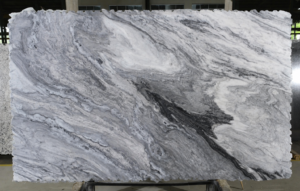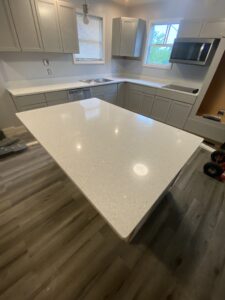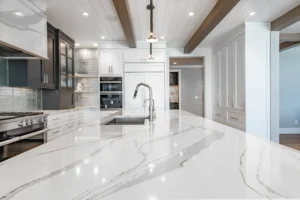
Quartz vs quartzite comes down to one fact: quartz is engineered in a factory from ground quartz and resin, and quartzite is natural stone cut from a quarry. That single difference decides how each one handles a hot pan, whether it needs sealing, how much one slab varies from the next and what you’ll pay. This guide compares the two on hardness, heat, upkeep, looks and cost, shows you how to spot a slab that’s been mislabeled as quartzite, and helps you pick the one that fits how you actually use your kitchen.
Key Takeaways
- Quartz is an engineered surface made mostly of ground quartz bound with resin. Quartzite is a natural metamorphic rock formed when quartz-rich sandstone was recrystallized by heat and pressure.
- Quartz never needs sealing and shrugs off stains, but its resin binder can scorch, so hot pans belong on a trivet.
- True quartzite is harder than quartz and handles heat well, but it’s porous to varying degrees and needs sealing on an interval set by your specific slab.
- Some stone sold as quartzite is really marble or dolomite, which etches. A glass scratch test and a lemon juice test will tell you before you buy.
- Choose quartz for zero upkeep and consistent color. Choose quartzite for the veined look of marble on a surface that stands up to real cooking.
On This Page
- Quartz vs Quartzite: What Each Material Actually Is
- Quartzite vs Quartz Countertops Compared Side by Side
- Is Quartzite Harder Than Quartz? Durability, Heat and Sealing
- Which Countertop Is Right for Your Kitchen?
- Frequently Asked Questions
- See Quartz and Quartzite in Full Slab Before You Decide
Quartz vs Quartzite: What Each Material Actually Is
The names sound alike because both are built from the same mineral. Almost nothing else about them is.
Quartz countertops are engineered. Manufacturers crush natural quartz, blend it with resin and pigment, and press it into slabs. The recipe is controlled, so one slab of a given color matches the next, and the resin closes every gap, which makes the surface non-porous. Granite Depot fabricates quartz from brands including Caesarstone, Silestone, HanStone and Spectrum Quartz, and you can compare colors and finishes on our page for engineered quartz countertops.
So what is quartzite? It’s a natural rock. Geology.com’s quartzite profile describes it as a metamorphic rock made almost entirely of quartz, formed when sandstone is recrystallized into a tight mesh of interlocking grains, with a hardness of about 7 on the Mohs scale. That interlocking structure is where its strength comes from. It’s quarried in blocks, sawn into slabs and polished, so no two slabs are ever the same.
The short version:
- Quartz: made in a factory, every slab of a color matches, non-porous, held together by resin
- Quartzite: cut from the earth, one of a kind, porous to some degree, held together by its own crystals
Quartzite vs Quartz Countertops Compared Side by Side
Here’s how the two compare once the countertop is installed and in daily use.
| Quartz | Quartzite | |
|---|---|---|
| What it is | Engineered from ground quartz, resin and pigment | Natural metamorphic stone |
| Scratch resistance | High, though the resin is softer than the quartz around it | Very high, about 7 on the Mohs scale |
| Heat | Resin can scorch; use trivets for hot cookware | Handles heat well; trivets still a good habit |
| Sealing | Never | Yes, on an interval set by the slab |
| Stains | Non-porous, spills sit on the surface | Resists stains once sealed; porosity varies by stone |
| Acids (lemon, wine, vinegar) | Resistant | True quartzite won’t etch; mislabeled marble will |
| Look | Consistent color, pattern repeats | Every slab different, natural veining |
| Cost | Broad spread by brand and pattern | Usually higher, and slower to fabricate |
Read the table as a trade. Quartz gives up some heat tolerance in exchange for a surface you never have to seal. Quartzite asks for a sealing routine and pays you back with hardness and a look nobody else will have.
Is Quartzite Harder Than Quartz? Durability, Heat and Sealing
Yes. True quartzite is solid, interlocked quartz, and it’s the most scratch-resistant natural stone we sell. Engineered quartz is hard too, but the resin between its quartz particles is softer than the stone around it. That resin is also why the two behave so differently near a stove.
Heat: Where Quartz Needs a Trivet
Caesarstone’s own care guidance says its surfaces need protection from temperatures above 300°F and that hot pots and pans should never go directly on the countertop. A skillet straight out of a 425°F oven clears that line easily. Quartzite formed under heat and pressure, so heat isn’t its weak point.
Sealing: Where Quartzite Needs a Routine
Quartz never needs sealing, and that’s the single most common reason people choose it. Quartzite is porous, and how porous depends on the stone. In the Natural Stone Institute’s guide to testing slabs, water left on one quartzite for 15 minutes soaked in and darkened the surface, while a dense sandstone barely absorbed any.
That variation is why we seal quartzite after installation with an impregnator sealer, which soaks into the stone rather than coating it, and give you the resealing interval for your specific slab instead of a blanket number. To check a sealed top at home, dribble a little water on it and wait 10 minutes. If the stone darkens underneath, it’s time to reseal.
Make Sure Your Quartzite Is Really Quartzite
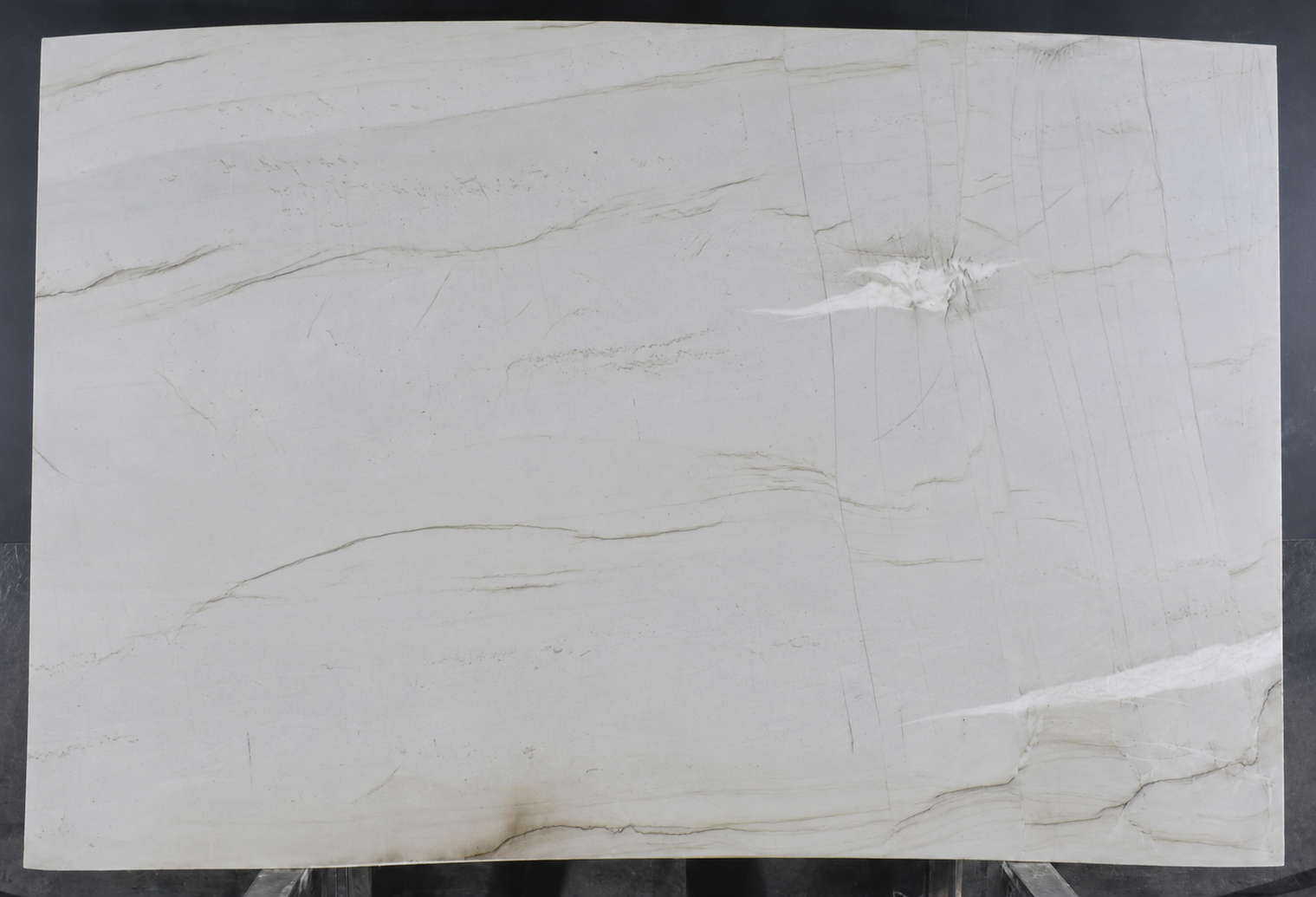
Some slabs sold as quartzite are actually marble or dolomite, and those etch when lemon juice or vinegar sits on them. The same Natural Stone Institute guide is blunt about it: there’s no such thing as soft quartzite, and a slab described that way is usually marble. Two quick checks settle it:
- Glass test: press a sharp, broken edge of the stone into a glass tile and drag it. True quartzite bites in and leaves a scratch you can feel. Marble and dolomite glide across and leave a mark that rubs off.
- Acid test: leave a few drops of lemon juice or vinegar on the surface for 5 to 10 minutes, then wipe and look at it from a low angle. A dull patch means the stone etches, so it isn’t true quartzite.
Get permission before testing a slab you don’t own yet. And if a seller turns vague when you ask whether a stone is true quartzite, take that as your answer.
Which Countertop Is Right for Your Kitchen?
Pick for the way you cook and the upkeep you’ll actually do, not for the slab that photographs best.
Quartz is the better call if:
- You want a surface you wipe down and never think about sealing
- You want a pure white, a true black or a pattern that stays consistent across a long run or a large island
- The kitchen gets hard use from people who aren’t careful, which is why it’s the material we recommend most for rental cabins and other rental kitchens
Quartzite is the better call if:
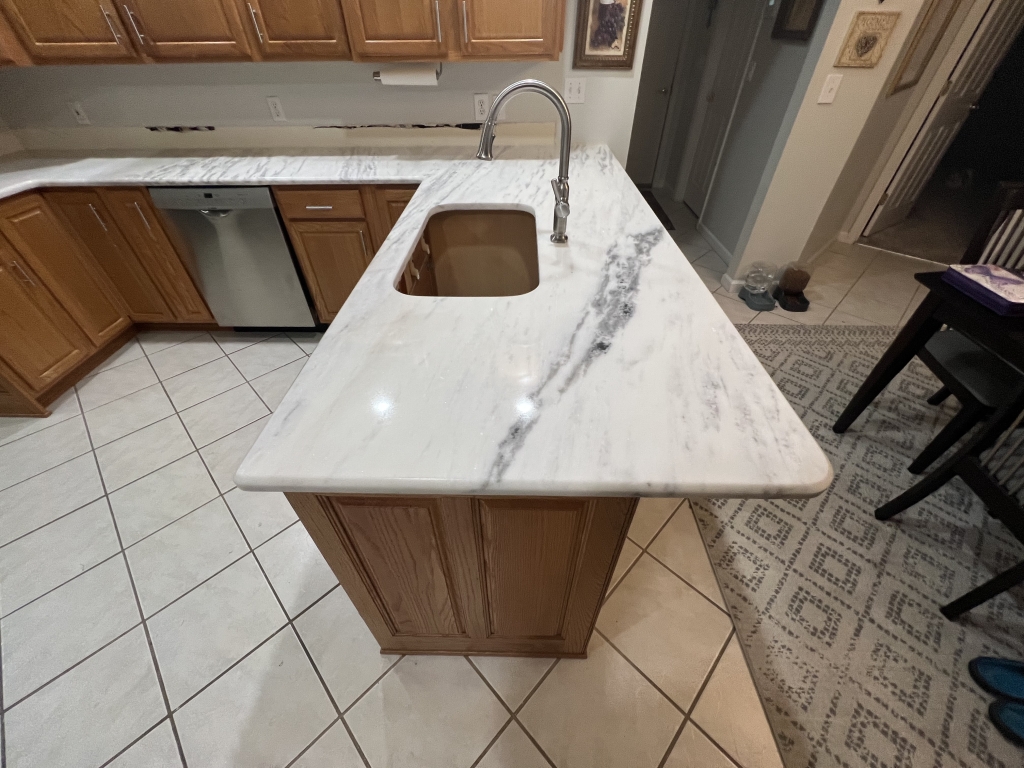
- You want the veined look of marble without marble’s etching
- You cook hot and often, and pans don’t always make it to a trivet
- You’re fine with resealing on a schedule
- You want a slab that exists nowhere else
On cost, quartzite usually runs higher than quartz. The stone tends to cost more to begin with, and because it’s so hard, it cuts slower and wears tooling faster, which adds fabrication time. Quartz prices vary widely by brand and pattern, so a premium marble-look quartz can land close to an entry-level quartzite. Your layout, edge profile, sink and cooktop cutouts and number of seams move the final figure as much as the material does.
If you’re leaning toward natural stone, look through our quartzite countertops in East Tennessee, then come see the real thing. Quartzite movement can shift noticeably across a single slab, which matters on a big island. Taj Mahal, Mont Blanc, Fusion and Tempest Blue come through our showrooms regularly, and our Knoxville area showroom on Middlesettlements Road in Maryville keeps more than 100 slabs in stock. Bring a cabinet door and your floor sample, and if you were considering marble, bring that sample too so you can compare.
Frequently Asked Questions
Is quartzite cheaper than quartz?
Usually not. Quartzite typically costs more than quartz because the stone is pricier to buy and its hardness makes it slower to cut and polish, which adds fabrication time. The two can overlap, though, since premium marble-look quartz from brands like Caesarstone or Silestone can sit close to entry-level quartzite.
What is the downside to quartzite?
Quartzite’s main downsides are sealing and cost. It’s porous to varying degrees, so it needs sealing after installation and again on a schedule that depends on the slab, and it generally costs more than quartz. The other risk is buying a slab labeled quartzite that’s really marble or dolomite, which will etch.
Fissures, the natural fractures that run along the stone’s structure, are normal in quartzite and aren’t cracks. We point them out when you select your slab.
Can you put a hot pan on quartz or quartzite?
On quartzite, yes, because heat isn’t its weak point, though a trivet is still good practice. On quartz, no. The resin binder can scorch or discolor under high heat, and Caesarstone advises protecting its surfaces from temperatures above 300°F, so hot pans, slow cookers and air fryers should sit on a trivet or hot pad.
Which is nicer, quartz or quartzite?
Quartzite is nicer if you want natural stone with real depth and veining that no other kitchen will have. Quartz is nicer if you want a flawless, consistent color and a surface you never seal. Neither wins across the board. It comes down to whether a sealing routine or heat caution is the trade-off you’d rather live with.
How long does it take to install quartz or quartzite countertops?
At Granite Depot, most quartz and quartzite jobs are templated within 48 hours of slab selection and installed 7 to 10 days later. Templating is the on-site measurement, done digitally, that the fabricators cut your countertop from. Both materials are cut in our own shop and fitted by our own install crews.
See Quartz and Quartzite in Full Slab Before You Decide
If upkeep is what worries you, lean quartz. If heat and scratches worry you more, and you’d like a stone nobody else has, lean quartzite. Either way, a two-inch sample can’t show you how the veining reads across an island, so see full slabs at our showrooms in Maryville, Johnson City or Sevierville. Johnson City is also open Sundays, 12pm to 5pm.
Call (888) 813-2021 and we’ll tell you which showroom has the stone you’re after. When you’re ready, get a free estimate, with no obligation and no pressure, and a team member will contact you during business hours.