Quartzite countertop colors include clean white, warm cream, soft gray, gold, and blue-gray, and white or light gray stone with soft veining is the most common choice. This guide covers the colors people ask about most, why natural quartzite varies so much between slabs, and what a leathered finish changes. You’ll also learn how to confirm a slab is real quartzite. Granite Depot fabricates quartzite in its own shop and keeps full slabs on the floor at three East Tennessee showrooms, so you can compare colors in person.
Key Takeaways
- White and light gray are the most common quartzite countertop colors, because pure quartzite is naturally white to gray.
- Yellow, red, and blue tones come from other minerals in the stone, so no two slabs match exactly.
- A small sample shows the color family, not your finished counter, so choose from a full slab.
- A leathered quartzite finish is matte with light texture, and you choose it before fabrication.
- True quartzite resists etching, the dull marks acid leaves behind, so a white slab that etches is probably marble or dolomitic marble sold as quartzite.
On This Page
- What Are the Most Popular Quartzite Countertop Colors?
- Why Does Quartzite Come in So Many Colors?
- What Does a Leathered Quartzite Finish Change?
- How Do You Pick a Quartzite Slab and Confirm It’s Real?
- Frequently Asked Questions
- What Should You Do Before You Choose a Quartzite Color?
What Are the Most Popular Quartzite Countertop Colors?
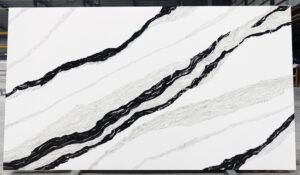
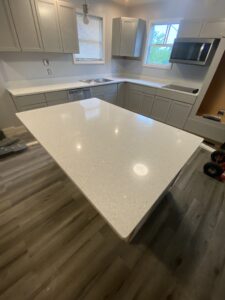
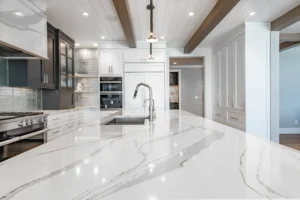
White and light gray are the most common quartzite colors, with cream, gold, and blue-toned stones rounding out the range. Granite Depot fabricates quartzite countertops for kitchens, bathroom vanity tops, backsplashes, fireplace surrounds, and shower surrounds. Taj Mahal, Mont Blanc, Fusion, and Tempest Blue come through our floors regularly, though stock changes.
| Color family | Example slab | What you’ll see | Worth knowing |
|---|---|---|---|
| Warm white and cream | Taj Mahal | Creamy white with soft gray and gold movement | Tone shifts slab to slab, so check it under your own lighting |
| Cool white | Mont Blanc | Cleaner white with gray veining | Photos flatten it, so see it in person |
| Multicolor | Fusion | Layered movement in several tones | Movement can shift across one slab, which matters on an island |
| Blue | Tempest Blue | A blue-toned stone, less common than the whites and creams | Call ahead, since inventory differs by showroom |
White quartzite deserves its popularity. It gives you the veined look of marble without marble’s chemistry, so acids like lemon juice are far less of a threat. The trade is cost: quartzite generally costs more than granite and most marble, and its hardness makes it slower to cut.
Why Does Quartzite Come in So Many Colors?
Quartzite starts as quartz-rich sandstone that heat and pressure turn into solid rock. Pure quartz is white to gray, and Britannica’s geology entry describes quartzites as mostly white, less often pink or gray. Beyond that, geoscientists at the University of Jena link yellows and reds to iron minerals and note that minerals such as dumortierite or kyanite can add a blue tint.
The same variation shows up inside one stone name. Two slabs sold as the same quartzite can look noticeably different at full size, because they come from different parts of a quarry, so a small sample can’t tell you how the veining will run across your island.
What Does a Leathered Quartzite Finish Change?
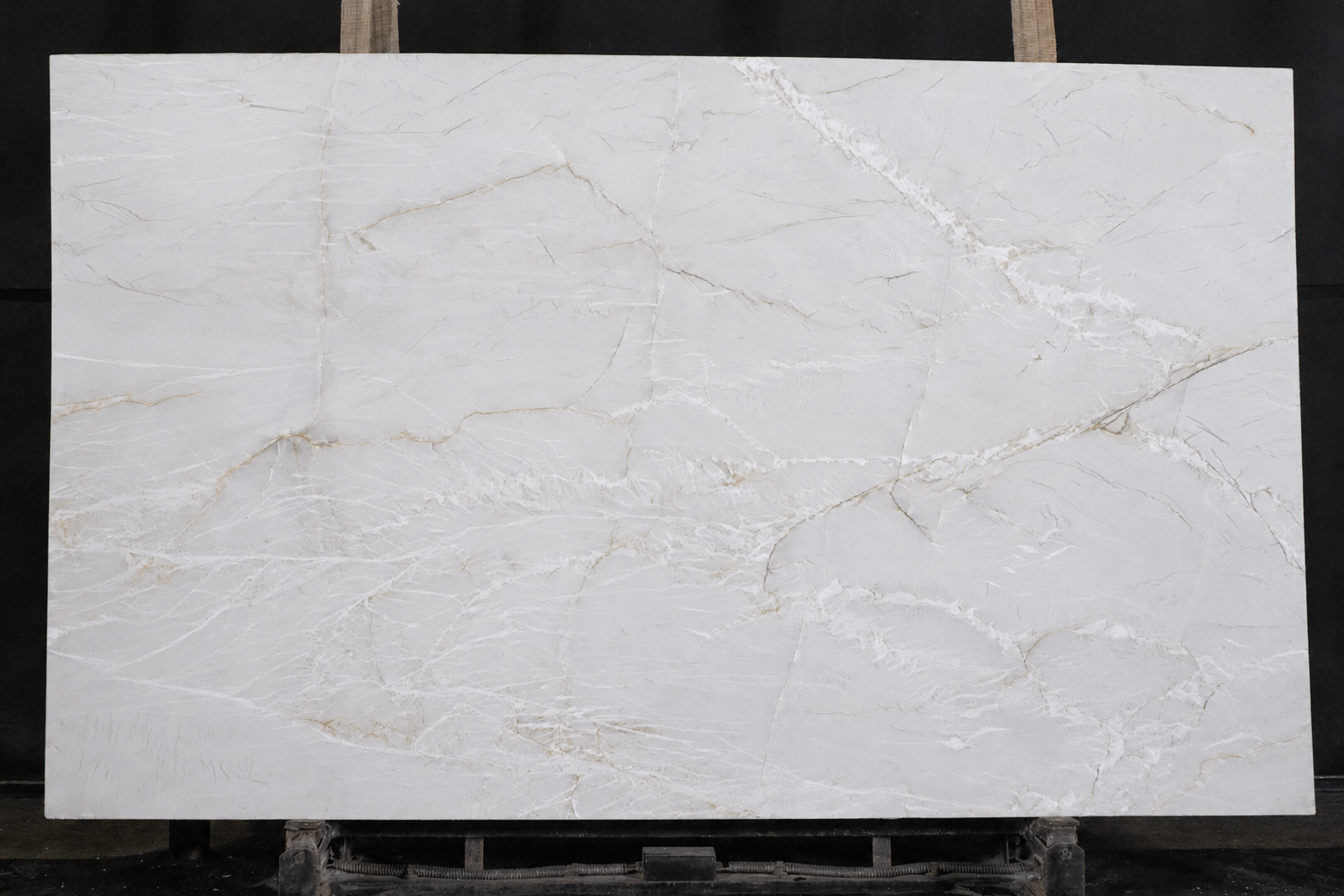
Leathered quartzite has a soft matte surface with light texture instead of a mirror polish. Livingetc’s interviews with stone specialists point out that “leathered” is a generic term covering several brushed finishes, so how much texture you get depends on the stone and the finisher.
- Look and feel: the low sheen reads warmer than polish and hides fingerprints and water spots, and the texture can be subtle or clearly grained.
- Cleaning: crumbs and residue can settle into the texture, so wiping takes a little more effort.
- Sealing: the finish doesn’t replace it.
- Timing: you choose the finish before fabrication, because you can’t add it to a finished counter.
Ask your Design Specialist which stones on the floor they can finish leathered, and compare a leathered sample against a polished one. The sealing and cleaning routine we recommend applies to both.
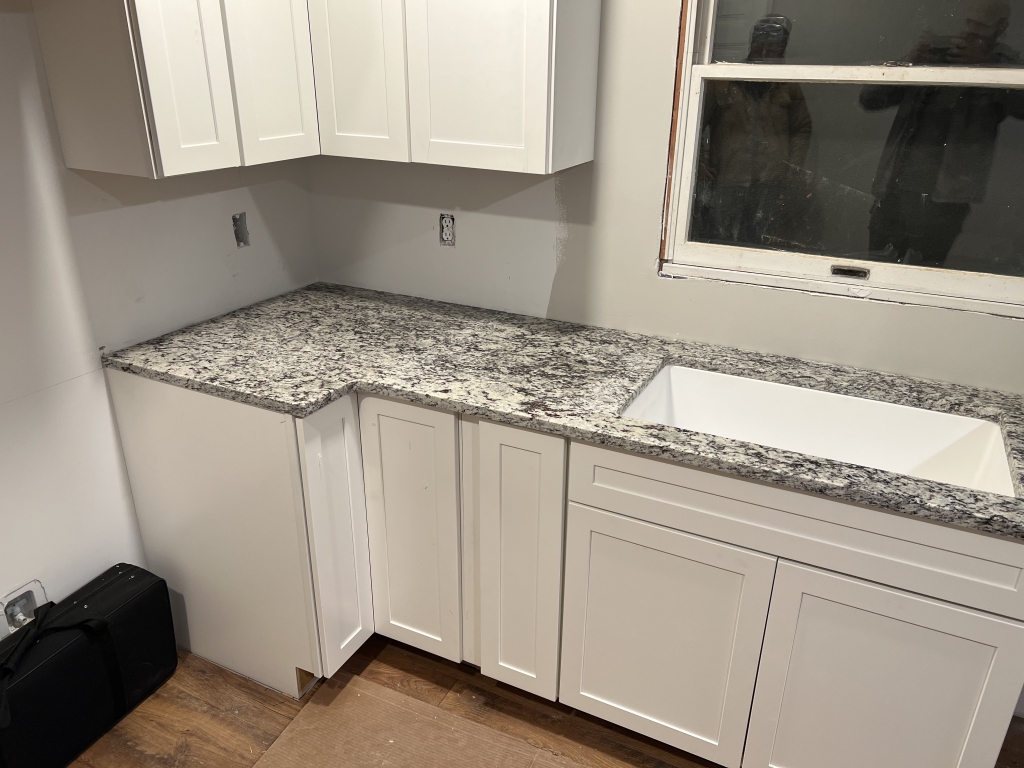
How Do You Pick a Quartzite Slab and Confirm It’s Real?
Start with the label. The Natural Stone Institute’s consumer campaign warns that some stones sold as quartzite are actually marble or dolomitic marble, a marble-like stone that etches. Ask your supplier exactly what the stone is, and test a spare piece or an out-of-sight spot with a drop of lemon juice or vinegar, not your finished counter. Real quartzite won’t etch.
Then see the slab itself. We keep over 100 full slabs across three showrooms: the Knoxville area showroom on Middlesettlements Road in Maryville, the Johnson City showroom on Kingsport Highway, and Sevierville. Johnson City is the only one open Sundays, from noon to 5pm, and inventory differs between locations, so call ahead about a specific stone.
- Bring a cabinet door, paint chip, or flooring sample and hold it against the slab under real light.
- Walk the whole slab, not one corner, because movement can shift across it.
- Ask which sealer suits your stone and how often to reapply it.
Frequently Asked Questions
What is the most popular quartzite countertop color?
White quartzite and light gray stones are the most popular quartzite countertop colors. Pure quartzite is naturally white to gray, so those stones are the most common and the easiest to source. Cool whites like Mont Blanc suit painted and dark cabinets, and warmer creams like Taj Mahal suit wood and warm palettes.
What are the downsides of quartzite countertops?
Quartzite costs more than granite and most marble, needs sealing to resist stains, and is slower to cut. Every slab also varies, so a sample may not match the slab you get, which is why we recommend choosing from a full slab.
Is quartz or quartzite better for a kitchen?
Neither wins across the board. Quartzite is natural stone that is harder, handles heat better, and needs sealing. Quartz is a mix of ground quartz and resin, so it never needs sealing, but the resin is the weak point under a hot pan. Choose quartzite for natural veining and heat tolerance, and quartz for low maintenance.
Where can I see quartzite slabs in East Tennessee?
Granite Depot has showrooms in Maryville (the Knoxville area), Johnson City, and Sevierville, with more than 100 full slabs across the three. Inventory differs by showroom, so call ahead and ask which one has the quartzite you want. Bring a cabinet door or paint chip to compare against the full slab.
What Should You Do Before You Choose a Quartzite Color?
The decision in front of you is less about white versus gray and more about which actual slab goes in your kitchen. See two or three color families full size with your cabinet door beside them. Stop by a showroom or call (888) 813-2021 and a Design Specialist will help you match a slab to how you cook. Or get a free estimate and a team member will follow up during business hours.