Marble countertops turn a kitchen or bathroom into something special — but that beauty comes with a few ground rules. The stone needs a pH-neutral, non-abrasive cleaner and a soft microfiber cloth for daily wiping. General-purpose sprays etch and dull polished marble over time, so acidic or abrasive products stay off the counter entirely. Spills need attention right away, especially wine, citrus juice, and vinegar, since marble’s porous surface absorbs liquid — and stains — fast. Here’s exactly what to use, what to avoid, and how to keep marble looking freshly installed for years to come.
What Do You Need Before Cleaning Marble Countertops?
Preparation matters more than any single product when it comes to how to clean marble countertops the right way. Marble carries a reputation as a high-maintenance natural stone, right alongside slate, limestone, and travertine — and there’s a reason for that. Each of these materials shares one trait: a soft, porous surface that reacts poorly to harsh treatment. Skip the prep work and the risk is real — a dulled polish or a permanent etch mark that no amount of scrubbing undoes.
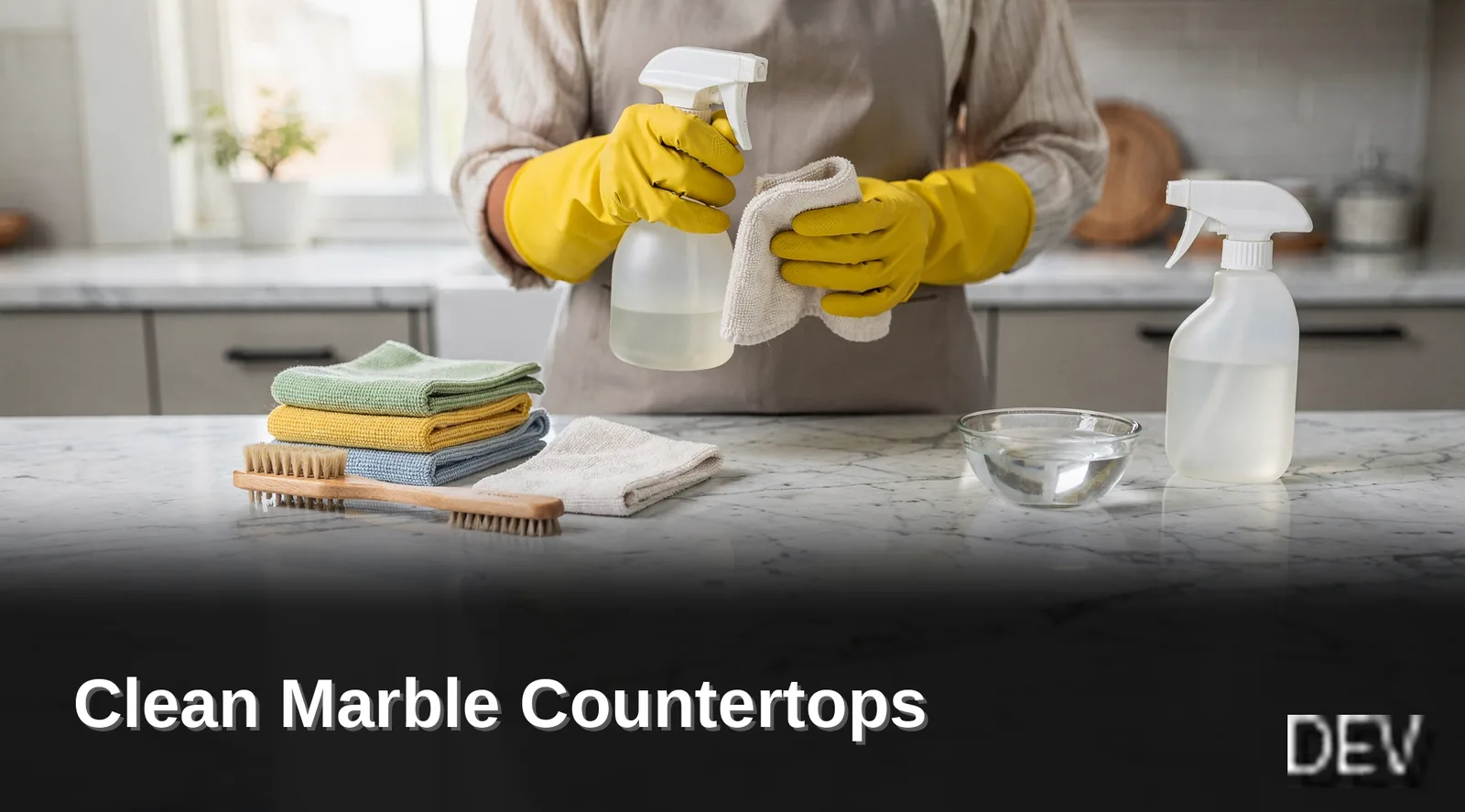
The good news is the supply list is short, and nothing on it is specialty or expensive. Basic dish soap works as the everyday cleaner for marble — there’s no need to buy a dedicated stone cleaner just for a routine wipe-down. Before starting, gather:
- A mild dish soap free of citrus or vinegar additives
- Warm water in a spray bottle or bowl
- Two soft microfiber cloths — one for cleaning, one for drying
- A soft-bristle brush for grout lines or textured edges
Why Does Marble Need Special Cleaning Supplies?
Marble’s calcium-based composition makes it sensitive to acidic ingredients found in many all-purpose cleaners. Standard kitchen sprays containing lemon, vinegar, or bleach can etch the surface within minutes. Sticking to gentle, pH-neutral products protects the polish and keeps the stone’s natural veining intact.
Is Marble Countertop Care Really Difficult?
It looks intimidating from the outside, but the process becomes manageable once the basic principles click. Understanding what the stone reacts to — and having the right tools on hand — turns a stressful chore into a quick five-minute task. Well-maintained countertops also preserve the polished look that drew homeowners to marble in the first place, whether it’s a kitchen island or a bathroom vanity.

How Do You Clean Marble Countertops Daily?
Daily marble care relies on a soft cloth, warm water, and a small amount of mild dish soap — not harsh commercial sprays. Treat marble like an ordinary countertop material and the polish dulls faster than it should, shortening the stone’s lifespan. A complete stone care routine covers more than one habit, too. It spans everyday wipe-downs all the way through periodic disinfecting sessions that keep the surface sanitary and protected.
Keeping a kitchen marble countertop looking its best takes a bit more attention than a standard surface, but the daily basics are simple once they click. Follow these steps each day to protect the stone’s finish:
- Wipe up spills immediately, especially anything acidic like citrus juice, wine, or coffee.
- Dampen a soft microfiber cloth with warm water and a few drops of mild dish soap.
- Wipe the countertop surface in gentle circular motions, avoiding abrasive scrub pads.
- Rinse the cloth, then go over the surface again with clean water to remove soap residue.
- Dry the countertop fully with a separate soft cloth to prevent water spots and streaking.
Is Dish Soap Really Enough for Marble Countertops?
Yes — dish soap is the recommended go-to product for daily wipe-downs on marble surfaces. It cleans effectively without introducing the acidic or abrasive ingredients that etch and dull natural stone over time. Reaching for an all-purpose cleaner or vinegar solution instead undermines the very routine designed to protect the stone.
Why Does Marble Need a Different Daily Routine Than Other Countertops?
Marble reacts to acids and abrasives differently than laminate, quartz, or granite. For busy households — and for property managers keeping several units consistent — treating marble the same way as those materials often does more harm than good, leading to permanent dulling long before deeper staining or damage ever becomes visible.
How Do You Deep Clean Stubborn Marble Stains?
Stubborn stains on marble demand a gentler approach than most homeowners assume. Despite marble’s reputation as a high-maintenance material, removing a set-in stain without damaging the stone is far more manageable than popular wisdom suggests. Success comes down to the right method, not brute force.
Before tackling any stain, confirm one rule above all others: no acidic products. Repeated use of harsh or acidic cleaners etches and dulls the polished surface over time, leaving permanent damage that no amount of scrubbing reverses. That single mistake accounts for most avoidable marble damage in kitchens and bathrooms.
What’s the Safest Way to Tackle a Stubborn Stain?
Follow these steps in order for a stain that won’t budge with basic wiping:
- Identify the stain type first — oil-based, water, or organic residue — since treatment varies slightly.
- Choose a pH-neutral cleaner formulated for natural stone; skip anything labeled acidic or abrasive.
- Apply the cleaner directly to the stained area and let it sit briefly rather than scrubbing immediately.
- Wipe with a soft cloth, working in gentle circular motions.
- Dry the surface completely — never let marble sit soaking wet, since prolonged moisture weakens the stone’s protective seal.
- Repeat the process if the stain persists, rather than switching to a stronger, riskier product.
Does Marble Need Special Products for Everyday Stains?
Yes — marble countertops need gentler formulations than standard kitchen or bathroom cleaners. Everyday surface cleaners often contain acidic compounds that seem harmless but cause cumulative dulling with repeated use. Sticking to stone-safe products protects both the shine and the structural integrity of the countertop, and pairing that routine with periodic professional resealing helps the surface resist future staining for the long haul.
How Do You Disinfect Marble Without Damage?
Safe disinfection depends on timing and follow-through, not just the product in the bottle. A brief, controlled application beats a long soak every time — marble left sitting in liquid absorbs moisture and stains from the inside out. Treat disinfecting as one part of a larger maintenance rhythm, not a one-time fix.
The core rule stays simple: never let marble sit soaking wet. Standing liquid works its way into the stone’s pores, and prolonged exposure invites staining that no amount of scrubbing reverses. Wiping a disinfecting product on, then drying thoroughly, protects the surface far better than leaving a cleaner to “work” for extended periods.
What Role Does Resealing Play in Disinfecting Marble?
Resealing forms the other half of the equation. A fresh seal keeps the stone’s protective barrier intact, so disinfecting liquids can’t penetrate the surface even during brief contact. Without that barrier, even a quick wipe-down risks pulling moisture and residue into the stone — which is why a lot of homeowners eventually bring in a stone care professional to check the seal and refresh it before it becomes a bigger problem.
Is Disinfecting Different From Everyday Cleaning?
Yes. Everyday wipe-downs handle spills and light residue, but periodic disinfecting addresses bacteria buildup that daily cleaning misses. A complete maintenance routine includes all three:
- Wipe daily with a soft cloth to remove crumbs, spills, and light grime.
- Disinfect periodically using a brief, non-acidic application followed by immediate drying.
- Reseal on a consistent schedule to maintain the stone’s resistance to moisture and staining.
Skip any one of these three steps and the others weaken, leaving marble exposed to damage that shows up months later as dull spots or permanent staining.
What Mistakes Should You Avoid When Cleaning Marble?
Common cleaning errors turn a simple wipe-down into a costly repair. Treat marble like an ordinary laminate or quartz surface and the risk of real damage to the stone goes up fast. Marble reacts differently than other countertop materials, and skipping that distinction leads to dull spots, etching, and permanent staining. Getting how to clean marble countertops right starts with knowing what not to do.
The biggest myth homeowners believe is that marble is too delicate for regular use. Popular wisdom overstates how fragile the stone actually is — damage from everyday surface cleaners is largely avoidable once the right products and habits are in place. The real danger isn’t cleaning marble; it’s cleaning it incorrectly.
Avoid these frequent missteps:
- Reaching for all-purpose or acidic cleaners. Products designed for granite or laminate often contain ingredients that dull marble’s polish.
- Skipping a designated stone-safe cleaner. Generic sprays lack the pH balance marble requires.
- Ignoring spills for too long. Letting liquids sit invites staining and surface breakdown.
- Scrubbing with abrasive pads. Rough tools scratch the polished finish permanently.
Does Neglecting Marble Cleaning Affect Home Value?
Yes. Well-maintained marble countertops add noticeably to a home’s overall value and appeal. Buyers touring a property notice dull, stained, or scratched stone immediately, and it signals neglect. Consistent, correct care — paired with quality installation from the start — keeps marble looking showroom-fresh and protects that investment over time.
Property managers overseeing multiple units should train cleaning staff on these distinctions rather than assuming standard kitchen protocols apply. A brief lapse in technique costs far more to fix than it does to prevent — and when a countertop is past the point cleaning alone can fix, it’s worth talking to a stone care professional about resealing, restoration, or replacement options before small damage turns into a bigger renovation.
Ready for a Deeper Refresh?
Daily wipe-downs and careful stain removal go a long way, but marble that’s lost its shine, needs resealing, or shows deeper etching is best handled by a stone care professional. Granite Depot‘s team works with natural stone every day and can assess your countertops, reseal them properly, or talk through restoration and replacement options — so your marble keeps its polished look for years to come. Reach out to get a free estimate and personalized advice for your stone.
Frequently Asked Questions
How often should marble countertops be cleaned?
Marble should be wiped down daily with a soft cloth, warm water, and a few drops of mild dish soap. Spills — especially acidic ones like wine, citrus juice, or coffee — need to be wiped up immediately rather than left to sit.
Can I use vinegar or lemon to clean marble countertops?
No. Vinegar, lemon, and other acidic ingredients react with marble’s calcium-based composition and etch the polished surface, often within minutes. Stick to pH-neutral, stone-safe cleaners instead.
How do you clean white marble without staining it?
White marble shows staining and etching more visibly than darker stone, so the same rules apply with extra care: use only pH-neutral cleaners, wipe spills immediately, dry the surface fully after cleaning, and avoid abrasive pads that dull the polish.
How often should marble countertops be resealed?
Resealing on a consistent schedule keeps the stone’s protective barrier intact and helps it resist moisture and staining. If you’re unsure whether your countertops need resealing, a stone care professional can check the seal and recommend the right timing for your specific marble.
What’s the best way to remove a stubborn stain from marble?
Identify the stain type, apply a pH-neutral stone cleaner, let it sit briefly, then wipe in gentle circular motions with a soft cloth and dry completely. Repeat as needed rather than switching to a stronger or acidic product, which risks permanent etching.
Conclusion
Marble countertops reward the right care with a polish that lasts for decades. The routine really comes down to a few consistent habits: pH-neutral cleaners only, spills wiped up right away, gentle drying after every clean, and a resealing schedule kept on track. Skip any one of those and the wear shows up sooner than expected — but stick with them and marble stays one of the most striking, durable surfaces a kitchen or bathroom can have. When a countertop needs more than a wipe-down, whether that’s a fresh seal, stain restoration, or a second opinion on its condition, bringing in a stone professional is the safest way to protect the investment for years to come. Contact Granite Depot Today! Our team can take a look at your marble and point you toward the right next step.