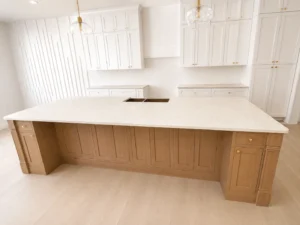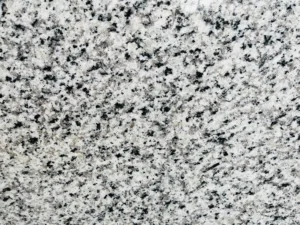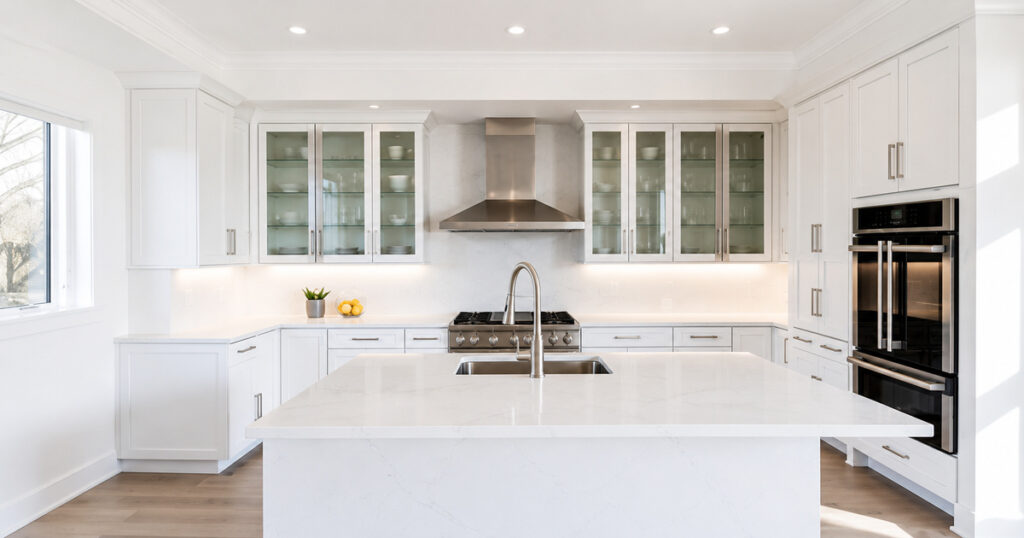
Granite countertop prices are not set by square footage alone. The slab you choose, how efficiently your layout fits on that slab, edge details, sink and cooktop cutouts, fabrication, removal and installation all change the final number. National 2026 guides put many granite projects in the low-thousands, but published per-square-foot ranges vary widely because different quotes include different scopes. This guide explains the parts of a granite quote so you can compare two estimates on equal terms and understand where your money is going.
Key Takeaways
- Published national guides commonly place installed granite projects around $2,000 to $4,000, but that is a broad benchmark, not a Granite Depot price.
- Granite levels are pricing groups, not a universal quality standard. One fabricator’s Level 2 can be another fabricator’s Level 3.
- Slab yield matters. A layout that forces a second slab can raise the project total even when the countertop square footage barely changes.
- Edge upgrades, cutouts, seams, removal, plumbing coordination and backsplash choices can change the total beyond the stone itself.
- The best comparison is a written quote with the same material, thickness, scope and timeline.
On This Page
- How Much Do Granite Countertops Cost?
- What Drives Granite Countertops Cost per Square Foot?
- Why Two Granite Quotes Can Be Very Different
- How to Budget for Granite Without Guessing
- Frequently Asked Questions
- Get a Project-Specific Granite Estimate
How Much Do Granite Countertops Cost?
If you are asking how much do granite countertops cost, start with a range, not a single number. HomeAdvisor’s 2026 cost guide places many projects around $2,000 to $4,000 nationally, while The Home Depot’s countertop installation guide lists granite from roughly $43 to $140 per square foot. Those figures are useful for context, but they are not interchangeable because the scope, stone and included labor can differ.
For an actual project, the granite price per square foot is only one part of the quote. A compact kitchen using a widely stocked stone can cost less than a smaller but more complicated layout that needs a rare slab, several cutouts and a second piece of material. If you are comparing materials, start with Granite Depot’s granite countertop options and then compare the exact slab, thickness and finish you would actually install.
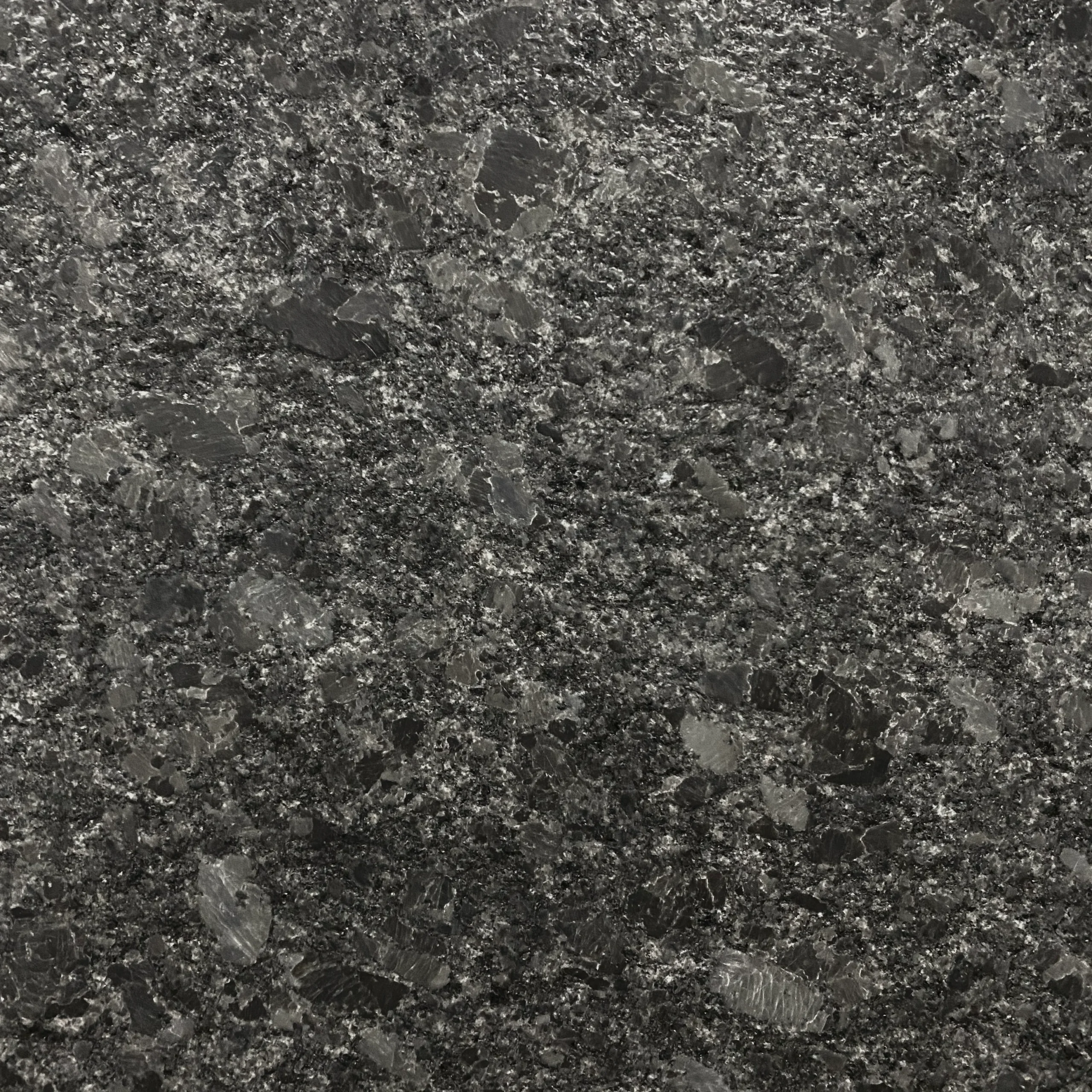
What Drives Granite Countertops Cost per Square Foot?
The cost of granite countertops installed usually moves for six reasons. Stone is one of them. Fabrication and project complexity are the others.
1. Granite levels and slab rarity
Granite levels are pricing categories used by suppliers and fabricators to group slabs. They are not a universal grading system for strength or quality. Fixr’s granite cost guide notes that fabricators may use numbered levels or labels such as builder, premium and designer. The label tells you how that seller groups the stone, not whether a Level 3 slab is objectively “better” than a Level 2 slab somewhere else.
What usually pushes a slab into a higher price group is availability, color, movement, origin and how difficult it is to replace. A common pattern that is stocked regularly is easier to price than a dramatic or limited slab that may need special sourcing.
2. Square footage and slab yield
Square footage matters, but slab yield matters more than many homeowners expect. Yield is how efficiently your countertop pieces fit on the slab. Long islands, tall backsplashes, bookmatched sections and awkward corner layouts can create more waste. If the layout needs a second slab, the project may jump in cost even if the measured countertop area increased only a little.
3. Fabrication complexity
Fabrication is the shop work that turns a full slab into your countertop. Straight runs with one sink are simpler than a kitchen with multiple seams, a large island, a cooktop, faucet holes and detailed vein placement. Granite Depot’s kitchen countertop installation and replacement process includes slab layout, seam planning, fixture cutouts and edge profiles, so those decisions should be settled before fabrication starts.
4. Edge profiles and thickness
A standard eased edge takes less shop time than an ogee, laminated edge or mitered build-up. Thickness also matters because quotes need to be compared like for like. A lower quote is not really lower if it uses a different thickness or excludes an edge detail that another quote includes.
5. Sink, cooktop and other cutouts
Every opening has to be measured and fabricated accurately. An undermount sink, cooktop, faucet holes, outlets in a full-height stone backsplash and specialty fixtures add work. The difference is not just the number of holes. Placement can affect seam locations and how much usable stone remains.
6. Removal, installation and backsplash scope
Ask whether old countertop removal, disposal, sealing, installation, sink mounting and plumbing coordination are included. Backsplash scope matters too. A four-inch granite splash may use remnant material, while a full-height slab backsplash can require substantial additional stone. Granite Depot’s guide to choosing a backsplash for granite can help you decide on the look, and its stone backsplash installation page explains the difference between a short splash and a full-height slab.
Why Two Granite Quotes Can Be Very Different
Two quotes can both show the same countertop square footage and still be hundreds or thousands of dollars apart. Before assuming one company is simply more expensive, compare the scope line by line.
- The exact slab or granite level, not just the color family.
- The slab thickness and finish.
- How many slabs the layout requires and whether remnants remain.
- The edge profile included in the base price.
- The number and type of sink, faucet and cooktop cutouts.
- Old countertop removal and disposal.
- Backsplash material and height.
- Delivery, templating, fabrication, installation and sealing.
- Who is responsible for plumbing or electrical work before and after installation.
This is why “granite countertops cost per square foot” is useful for early planning but weak for choosing a fabricator. The final price is a combination of material and scope.

How to Budget for Granite Without Guessing
You do not need an exact online price to build a realistic budget. You need a consistent project definition. Use the same plan and the same assumptions every time you ask for a quote.
- Measure the project roughly. Estimate the countertop area, then let the fabricator verify it during templating.
- Choose the actual slab range. Compare stocked options in person. Natural stone varies from slab to slab, and a small sample cannot show the full movement.
- Decide on the backsplash early. A full-height slab can change how much stone the project needs, so make that decision before the countertop is cut.
- List every cutout and edge. Sink style, cooktop, faucet holes, overhangs and edge profile should be on the quote.
- Compare complete written scopes. Make sure every quote includes the same thickness, material, fabrication, removal and installation items.
For East Tennessee homeowners, Granite Depot’s biggest advantage in this part of the process is that you can see full slabs at its three showrooms before the stone is templated, fabricated in-house and installed by its own crews. That gives you a clearer basis for comparing the slab and the scope instead of comparing two vague per-square-foot numbers.
Frequently Asked Questions
What is a normal granite price per square foot?
There is no single normal price because published guides include different scopes. In 2026, national consumer guides show broad granite ranges that can start around the $40s per square foot and run well above $100 for premium material or more complex installed work. Use that only as a planning benchmark, then compare written project quotes.
Are higher granite levels better quality?
Not necessarily. Granite levels are usually seller-specific price groups based on rarity, color, sourcing and inventory. They are not a universal strength or quality grade. Ask to see the exact slab and compare its price, thickness, finish and suitability for your project rather than buying by the level number alone.
What makes the cost of granite countertops installed go up fastest?
A second slab is often one of the biggest jumps because the project has crossed from using part of one slab to purchasing more material. Large islands, full-height backsplashes, dramatic vein matching, multiple cutouts and premium edge work can also raise fabrication and installation costs.
Does a granite backsplash increase the countertop price?
It can. A four-inch splash may be cut from remaining material, while a full-height slab backsplash uses much more stone and can require another slab. If you want full height, bring it up during slab selection so the fabricator can plan yield before the countertop pieces are cut.
How can I compare granite quotes fairly?
Give each fabricator the same plan and ask for the same scope in writing. Compare the exact slab, thickness, finish, number of slabs, edge profile, cutouts, removal, backsplash, installation and any trade work that is excluded. A lower square-foot rate can become a higher final bill if important items are missing.
Get a Project-Specific Granite Estimate
Online ranges are useful for understanding the variables. Your kitchen still needs a project-specific number based on the slab and scope you actually want. Request a free in-home estimate from Granite Depot or call (888) 813-2021. Bring your kitchen plan if you have one, and compare the quote by material, fabrication and included work rather than by one headline square-foot figure.