
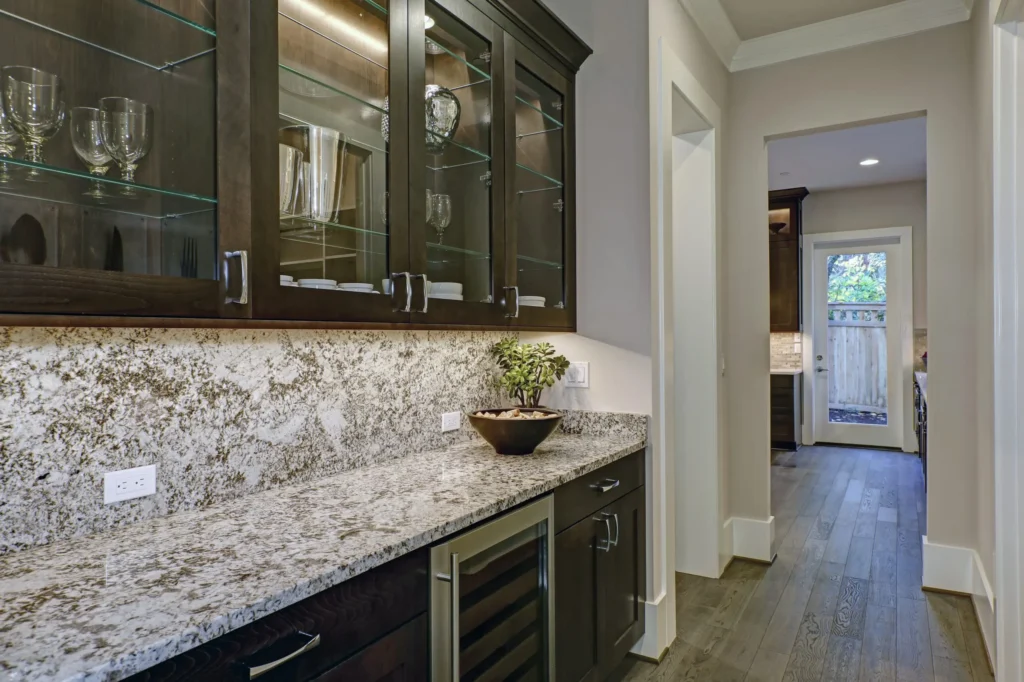
Quartz countertops resist staining far better than natural stone because their nonporous, resin-bound surface blocks liquids from soaking in. Spills from wine, coffee, or oil wipe away without sealing. Granite Depot fabricates and installs quartz countertops in 7–10 days, giving East Tennessee homeowners a low-maintenance, stain-resistant surface built for everyday kitchen use.
Do Quartz Countertops Stain?
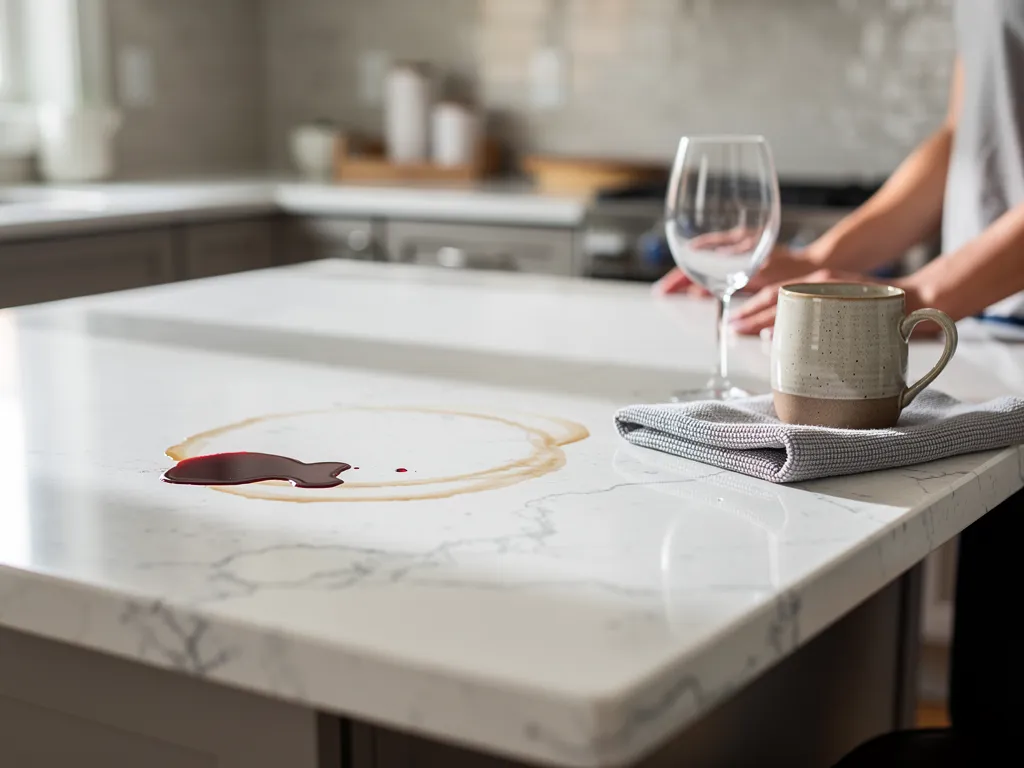
Quartz countertops resist stains far better than most natural stone, but “stain-resistant” isn’t the same as “stain-proof.” Homeowners searching do quartz countertops stain should know that quartz’s engineered composition gives it strong, reliable protection — not absolute immunity. Granite Depot fabricates and installs custom quartz countertops for kitchens and bathrooms across East Tennessee, using premium materials chosen for both durability and beauty.
Here’s why quartz holds up so well: the engineered surface combines natural quartz crystals with a resin binder, and that binder seals the surface in a way raw stone simply can’t match. Coffee, tea, and everyday cooking spills typically wipe away without leaving a trace. This nonporous structure is the real source of quartz stain resistance — it blocks liquids from soaking in the way granite or marble sometimes do.
Can Quartz Stain at All?
Yes — can quartz stain is a fair question, and the honest answer is occasionally. Highly pigmented substances left sitting too long, along with certain harsh chemicals, can leave marks that soap and water alone won’t fully lift. White quartz countertop stains tend to show up faster simply because lighter surfaces reveal discoloration more visibly than darker patterns.
What Reduces the Risk of Stains?
Prompt cleanup and gentle products go the furthest toward protecting a quartz surface. Homeowners researching how to get stains out of quartz and how to [clean quartz countertops](https://granitedepotstores.com/how-to-clean-quartz-countertops/) generally find success with nothing more than mild dish soap, warm water, and a soft cloth. A few habits make a real difference:
- Wipe spills soon after they happen
- Avoid abrasive scouring pads
- Skip harsh chemical strippers
Every Granite Depot installation is backed by a satisfaction guarantee, giving homeowners lasting confidence in their countertop long after installation day.
What Makes Quartz Resist Stains?
Density explains most of the answer. Quartz slabs contain roughly 90 percent natural quartz minerals bound into a surface so tight that liquids struggle to penetrate it at all. That density is the real engine behind quartz stain resistance, and it’s why quartz consistently outperforms softer, more porous stone options in daily kitchen use.
Homeowners researching do quartz countertops stain often assume any spill spells trouble. In practice, it doesn’t work that way — the tightly packed mineral structure leaves almost no open pore space for coffee, sauce, or juice to soak into. Most everyday spills simply sit on the surface rather than sinking in.
Can Quartz Stain Under the Right Conditions?
Extremely hard doesn’t mean invincible. Can quartz stain if a spill sits untouched for hours, or if a harsh chemical is left to dwell on the surface? Under those conditions, yes — resistance isn’t the same as immunity, and prompt cleanup still matters.
White quartz countertop stains tend to show discoloration faster simply because light surfaces reveal contrast more readily than darker patterns. The underlying density is identical; only the visibility differs.
Granite Depot’s fabrication and installation teams manage every stage of a quartz project with precision, from slab selection to final polish. That hands-on oversight protects the engineered density that gives quartz its resistance in the first place. Granite Depot also works in granite, quartzite, and marble, matching each homeowner’s lifestyle and maintenance preferences to the right material.
A few reasons quartz holds up so well:
- Ultra-dense mineral composition leaves minimal surface porosity
- Resin binding seals the slab, reducing absorption points
- Consistent factory-controlled fabrication limits weak spots or micro-cracks
Ready to discuss which stone fits your kitchen or bath project? Contact Granite Depot today to schedule a free estimate.
Which Substances Can Still Stain Quartz?
Red wine, turmeric, and beetroot juice pose the biggest threat to a quartz surface. Strong acids like vinegar and citrus juice cause similar damage when left unattended. These substances answer the common question of can quartz stain with a clear yes, under the right conditions. Quartz resists everyday spills far better than natural stone, but pigment and acid together can overwhelm that resistance quickly.
Homeowners often ask, “do quartz countertops stain, or is the material truly bulletproof?” The honest answer: quartz resists staining exceptionally well, but it isn’t invincible. Prolonged contact with highly pigmented liquids or permanent markers can leave marks that soap and water alone won’t fully lift. Timing matters more than most homeowners realize.
What Household Items Cause the Worst Quartz Stains?
Coffee and tea rarely leave lasting marks if wiped promptly. The real culprits are concentrated pigments and acidic ingredients that sit undisturbed on the surface:
- Red wine
- Turmeric and curry-based sauces
- Beetroot juice
- Vinegar and citrus juice
- Permanent marker
Each item on this list shares one trait: strong pigment or acidity that penetrates faster than a routine spill.
Selecting the right color and finish upfront reduces visible staining risk over the countertop’s lifetime. At Granite Depot’s three East Tennessee showrooms, homeowners compare more than 100 stone samples before settling on a quartz color and finish suited to their kitchen habits. That guidance continues well past the showroom floor — from the first visit through templating, fabrication, and final installation, Granite Depot’s experienced team delivers craftsmanship and quality materials that support long-term performance. Ready to start choosing a stain-resistant quartz color? Visit a Granite Depot showroom or request a free estimate today.
How Do You Remove Quartz Stains?
Prompt action solves most quartz stains before they set. Coffee, tea, and most cooking spills wipe away cleanly from a quartz surface when cleaned up within a few hours, leaving no trace behind. Speed matters more than the cleaning product chosen — a soft cloth, warm water, and mild dish soap handle the majority of everyday messes without any special equipment.
For homeowners searching how to get stains out of quartz after a spill has already dried, a non-abrasive cleaner paired with a plastic scraper — never a metal blade — lifts residue without scratching the surface. A gentle circular motion works better than aggressive scrubbing. Patience helps here, too; quartz responds well to repeated light passes rather than one hard scrub.
What’s the Safest Way to Clean Quartz Countertops Daily?
Daily maintenance calls for the simplest approach. Warm water, a few drops of dish soap, and a microfiber cloth keep surfaces looking new without dulling the finish. Homeowners learning how to clean quartz countertops should steer clear of bleach-based products and abrasive powders, both of which can wear down the resin over time.
Does a Countertop Warranty Cover Stain Damage?
Warranty coverage typically protects against installation defects rather than surface staining from household spills. Granite Depot backs every project with a one-year installation warranty, giving homeowners added assurance in the durability of their countertop investment. That protection, combined with routine care, helps a quartz surface hold its appearance well beyond the first year.
Because Granite Depot completes fabrication and installation in just 7 to 10 days, homeowners replacing a stained or damaged countertop don’t face months of waiting. Premium materials and precise craftsmanship back every project, aiming for results guaranteed to satisfy. Ready to move forward? Contact Granite Depot today to schedule a free estimate and start your project.
How Can You Prevent Quartz Stains?
Prevention starts with choosing the right slab and wiping up spills quickly. Quartz stain resistance depends partly on color and pattern, and partly on how homeowners care for the surface day to day. Selecting a durable, easy-care countertop from the start reduces the risk of long-term problems, and Granite Depot’s free estimates and price match guarantee help homeowners get strong value while making that choice.
Experience matters here, too. Granite Depot has fabricated and installed stone surfaces for more than 15 years, completing over 25,000 projects across East Tennessee. That track record gives the team a clear sense of which materials, finishes, and colors hold up best under real kitchen conditions — not just showroom lighting.
Do White Quartz Countertops Stain More Easily?
Lighter surfaces show discoloration more visibly than darker or heavily speckled ones. One widely shared homeowner account describes a white quartz countertop developing a visible stain within its first month of use. That kind of experience underscores why professional guidance on color and pattern selection matters before installation, not after.
What Daily Habits Help Prevent Stains?
Simple habits go a long way toward protecting a quartz surface long-term:
- Wipe spills immediately, especially wine, coffee, and oil-based sauces.
- Use cutting boards and trivets instead of setting hot pans directly on the counter.
- Avoid letting acidic foods, like citrus or tomato sauce, sit for extended periods.
- Choose mild, non-abrasive cleaners for routine maintenance.
These steps won’t replace smart material selection, but they reduce daily wear. Homeowners who combine careful use with expert guidance from the start typically see the best long-term results. If you’re weighing quartz against other options, Granite Depot’s team can walk you through granite, quartzite, and marble alternatives as well, so you choose the surface that best fits your household’s habits.
Still Have Questions About Quartz?
Choosing the right countertop is easier with an expert in your corner. If you’d like personalized guidance on colors, finishes, or care routines suited to your kitchen, reach out to Granite Depot or stop by one of our East Tennessee showrooms — our team is happy to help you compare options and plan your next project.
Frequently Asked Questions
Do quartz countertops stain more than granite or marble?
No — quartz is nonporous and generally resists staining better than granite or marble, which can absorb liquids if not properly sealed. Quartz’s resin-bound surface blocks most spills from soaking in, though highly pigmented substances left too long can still leave a mark.
How long can a spill sit on quartz before it stains?
Most everyday spills like coffee, tea, or cooking oil can sit for a few hours without staining. Highly pigmented liquids such as red wine, turmeric, or beetroot juice pose a higher risk and should be wiped up as soon as possible.
Can I use bleach or vinegar to clean quartz countertops?
It’s best to avoid bleach-based cleaners and harsh acids like vinegar, since repeated use can wear down the resin binder over time. Mild dish soap, warm water, and a soft cloth are safer for daily cleaning.
Are white quartz countertops more prone to visible staining?
White and other light-colored quartz surfaces don’t stain more easily in a structural sense, but discoloration shows up more visibly against a light background than on darker or heavily speckled patterns.
How quickly can Granite Depot install a new quartz countertop?
Granite Depot typically completes quartz fabrication and installation in 7 to 10 days, so homeowners replacing a stained or damaged countertop aren’t left waiting for months.
Conclusion
Quartz countertops resist staining better than many natural stone alternatives, though they remain susceptible to certain substances without prompt attention. Their nonporous, engineered surface offers reliable protection for busy kitchens and bathrooms when properly maintained — and a little daily care goes a long way toward keeping that surface looking new for years.
Understanding quartz’s strengths and limitations puts you in a strong position to decide whether it’s the right fit for your home. Granite Depot’s team is ready to guide you through material selection, color and pattern choices, and a fabrication and installation process built around quality and speed — helping you land on the countertop that best suits your kitchen or bath.